Breasts Without End
We all have them. They’re always changing. So the idea that our gender sticks to them, and permanently, is.... what is that
I am thinking of the people I know who had top surgery. Their descriptions of the first time they go shirtless at the beach, the park, out in the world with a masculine chest. Sun and air on it. Scars proudly displayed, sometimes.
We are grateful you’ve made us a small part of your life online! Gender Defiant will never be paywalled, so please tell fellow parents, allies, co-workers, and interested mutuals about us. If you’re already a paid subscriber, thank you! If not, will you consider helping to underwrite our expenses with a paid subscription?
And I am thinking about scars, how they are signs and tell stories. For instance, top surgery scars can be camouflaged by or paired with tattoo art. They can be flaunted, hidden, or just lived with privately, in a feeling of lightness, if a person has unburdened themself of breasts that conflicted with who they are.
Unburdening yourself.... now I’m thinking of the people in my life who have had breast reductions. Who suffered pain and had or were headed for spinal surgery (or surgeries, for my mom) on account of a lifetime struggling to hold up the weight of their chests. Who now have smaller breasts and no pain. After my friend Gina’s breast reduction, I didn’t even recognize her. The way she stood was so different.
Sometimes I imagine a breast fairy who can move the goods from people who don’t want them to people who do. A wave of a wand, a toss of flower petals, a few bars of Prince, and: done.
More ideal
The people I know who got full breasts from estrogen HRT also stand differently, feel different and better, like themselves. The life upgrade of having full breasts where once was a male-assigned chest seems as profound to me, a person on the outside, as after a breast reduction.
Now I am thinking of trans women I know who, on HRT, have full breasts yet imagine having more pert or rounder or larger or otherwise more ideal breasts, and that is so familiar to me, a mainly cis woman, because every woman I have known in my entire life has felt this way at some point. Waited or dreaded to get breasts, envied others, disliked the ones she got, seen them reshape and deflate in aging or after pushing a baby out, felt sad or ashamed or embarrassed or something else.
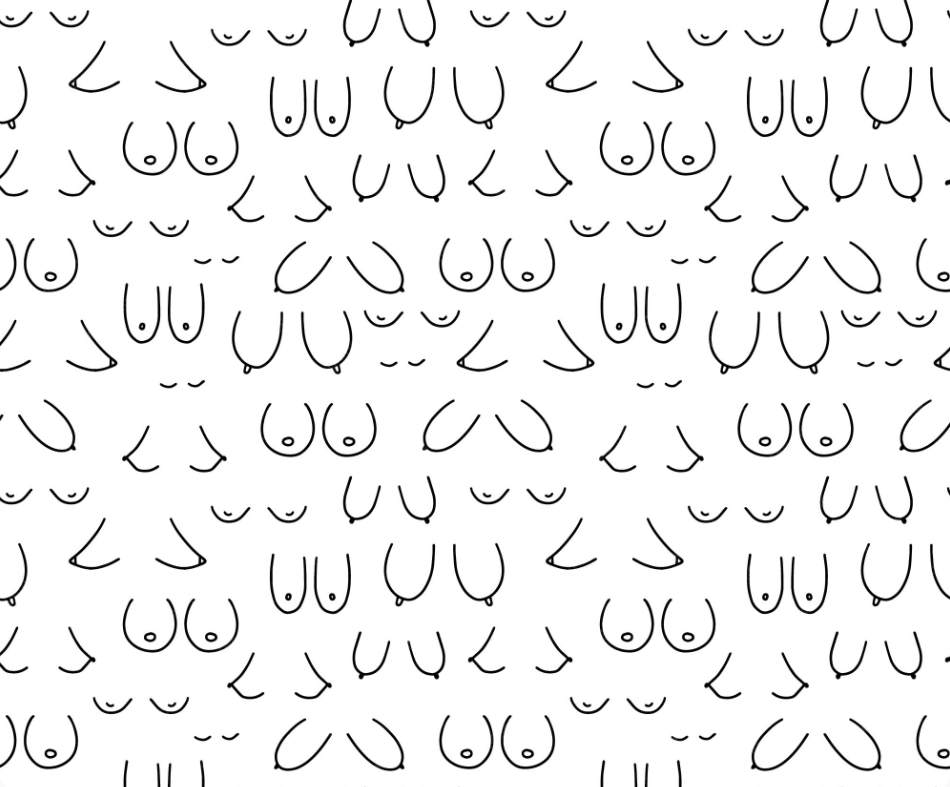
I wonder, as a mainly cis woman in America, why it has to be, in our culture, that gender clings hard to breasts. After all, everyone has* them. They are always changing.
Recently a monk who leads a meditation group I attend said not to be attached to our gender. This surprised me. Buddhism teaches non-attachment, so it shouldn’t have been surprising, but I’d never heard a monk utter the word gender. What a relief. I had been worried that the monk—whose tradition is 100% based on the idea that change is constant—would say that my daughter couldn’t be a girl.
My worry shows how my thoughts are conditioned (or: infected) by our culture.
“She has a nice bustline,” my grandmother, who was not from America, would have said about my daughter. “She’s a bride.”
Repeat after me
Breasts are always changing. Sometimes we change them. They are part of our bodies and so get older, get sick sometimes.
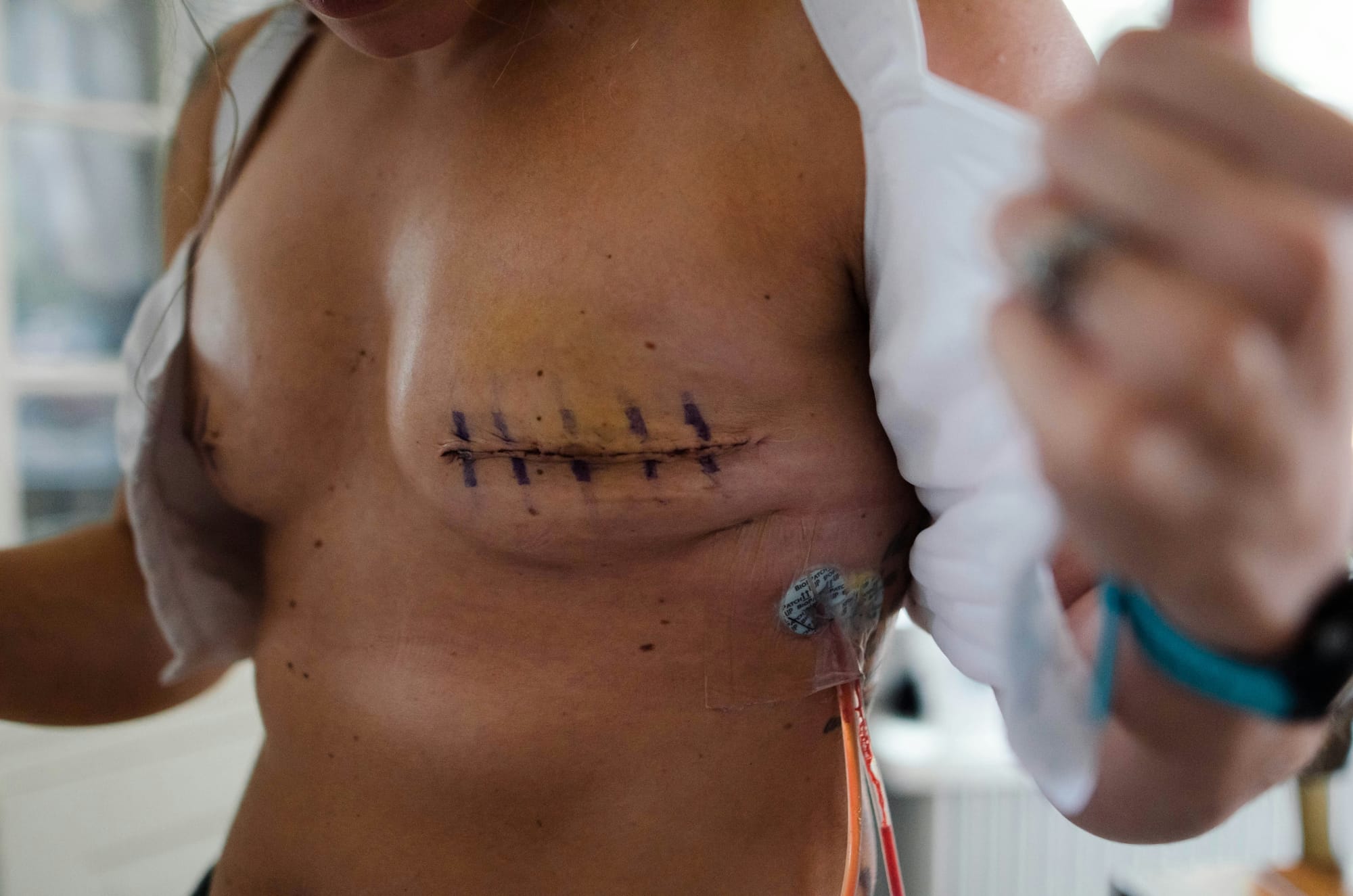
Now I am thinking of people in my life who have lost breasts to mastectomy. Some of them talk about the pressure to get breast reconstruction. One got silicone implants and became sicker.
It is generally assumed by oncologists and cancer specialists and, of course, plastic surgeons that every mastectomy patient (of which some are cis men: cancer knows no gender**) will find the loss of their breasts horrifying and want to replace them. Instead of inviting patients to pre-deem themselves unacceptable, patients could be invited to think about running a finger over a scar and finding it sexy. Maybe not that many would, I don’t know. But the idea of loss possibly leading to a new form of wholeness is definitely less profitable, financially.
A work colleague of mine went to a talk on Reclaiming Your Sexuality after her mastectomy. Repeat after me: I am sexy! ordered the speaker pacing the stage. My friend raised her hand and said, “do we have to be?”
Her little question made my world bigger. Why should it be an outlier question?
What do we have to be. Who gets to say.
Who gets to say
I am thinking of a trans man who had top surgery after becoming a father. His elderly mother raged, “you cut off your breasts, now my granddaughter won’t know who her mother is!” Really I’m not thinking about him but how I felt when the elderly mother told me this story. She expected me to agree and feel the way she did. Instead I had the same feeling I got that time our current President said how are the breasts?, when he made the gesture with his creepy hand like he was accepting tits on a tray.
The President meant that breasts should look a way he gets to say. The grandmother meant that, without breasts, her son is a mutilated mother.
I have sympathy for the grandmother’s grief. Adjusting to your child’s transition can be rough. The grandmother is not the same as the President. But their ideas both came from the same source, the culture we are steeped in.
Toward love
In a beautiful essay, a writer I admire who had a double mastectomy said: “Must we be beholden to whatever versions of our bodies—and our friend’s bodies, our spouses’ and our children’s bodies—currently exist?”
I think we are not very good at seeing each other suffer or change because it means we are also changing. We want our people more or less in the shape we have known, so we cling to it.
Letting go of the versions of our bodies that currently exist... I think of this question often, because it moves me outward from gender (whatever that is) toward all of our impermanence, and love.
— N.R.
*Some people who get top surgery choose not to have nipple grafts—for the look, to subvert the image of breasts as baby-nourishers, or both.
**The risk of breast cancer for trans masculine people who have had top surgery is greatly reduced. It’s not zero, but very low.
Noa Rabinow is a health care worker, an editor at Gender Defiant, and the mom of a trans teen.
 Tina Carson