A Trans Man Made Me Fall in Love with Men
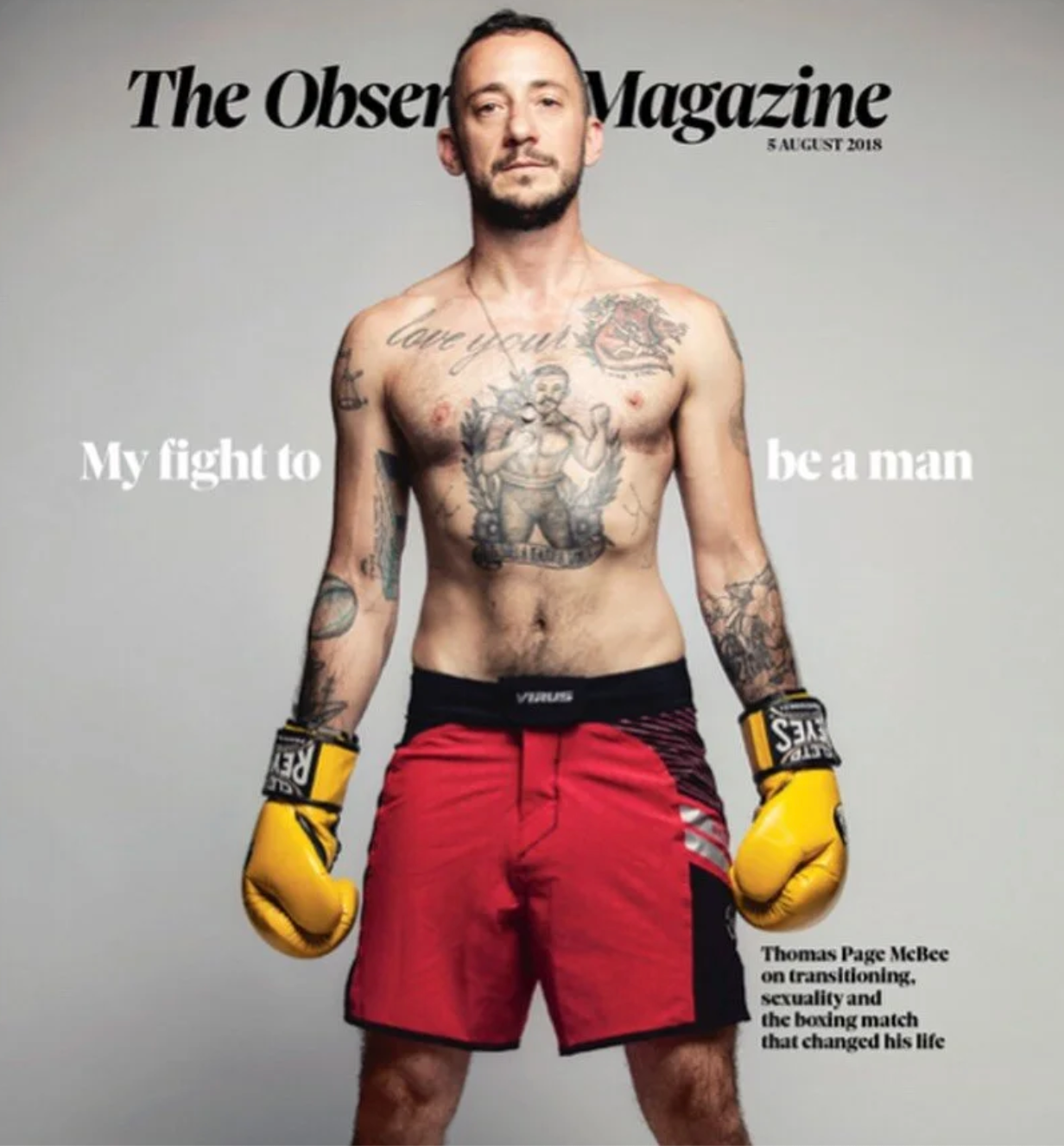
Thomas Page McBee’s memoir Amateur, about boxing, is ultimately a glorious detox from American masculinity
I don’t know if you’ve had the experience of quitting a terrible job, but if you have, do you remember the morning you woke up free? When it hit you that the place had been making you physically sick? Or maybe you remember the hour you walked out of an abusive relationship that you endured till at last you couldn’t. The lightness that floods you as you turn the key into your own, new space—I felt that reading Thomas Page McBee’s memoir Amateur.
In Amateur, the bad job and abuser is masculinity. The poisonous kind. Like me, McBee was raised as a girl in America and was harmed by men. This is of course not a revelation. Every person you know with a female body has been harmed by men in some way, from assault to rape to emotional abuse to casual misogyny at school, work, and home. Women fight it, cope with it, rationalize it, come up against it daily. It’s a job we can’t quit.
When McBee started on testosterone, in his 20s, he wondered how to shape his manhood. But could he? What if becoming a man comes with un-opt-outable violent tendences? Then, one day, on his way to buy ice cream for his girlfriend, a guy outside a bar tries to start a fight with him for no reason, and McBee is shocked to find he wants to respond with his fists.
This ignites a crisis of masculinity. Where did the urge to hit come from? Why do men fight?
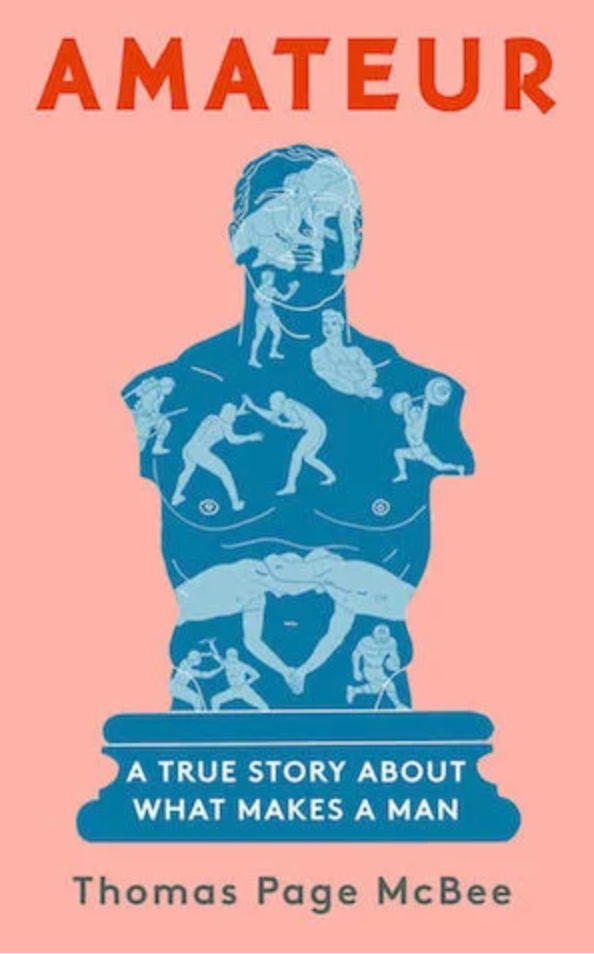
In search of an answer, McBee takes up boxing. I fell in love with men partly by seeing them through McBee’s eyes: at the gym, away from their lives in tech and construction and motorcycling and stock trading, these men (and at least one woman) of all ages, some very old, rest their arms casually over one another’s shoulders. They give each other critiques. They have affection and express it with respectful words and touch—in between bloody punches to the head.
The boxers’ trust is connected with fighting but doesn’t come from fighting. It comes from the vulnerability of having a body and putting it in the ring. In boxing, McBee finds, there is tenderness. McBee shows what tenderness looks like, sounds like, feels and smells like, as an aspect of masculinity.
No matter what, Gender Defiant tells the stories of real trans families going on with their lives, defiantly. Support us with a paid subscription.
Rocked
His journey to fighting at Madison Square Garden is a page-turner, but it’s not what stays with me from McBee’s book. I return to astonishing, smaller moments. For instance the morning McBee goes running along the river at dawn. There is woman ahead of him on the track—the only other person around. As he passes her, he sees “a panic in her face so familiar it rocked me.”
Having been raised as a girl, McBee knew very well how the woman would feel, but he was so into his run that he forgot to account for himself. It’s breathtaking how fast McBee’s empathy goes missing. You’d think, or at least I thought, that for a trans man it would be hardwired. But no. Empathy is a muscle, McBee realizes. He has to work it every day.
He vows to be different: “The next time I found myself behind a woman running alone, I thought, I would do what I wished men had done for me. I would announce myself. Passing on your right! I’d call. I would be careful to give her a wide berth. I would be aware that my body was, for much of the world, a weapon until proven otherwise.”
I would be aware that my body was, for much of the world, a weapon until proven otherwise.
I sat for a while absorbing this. I would do what I wished men had done for me. That’s when I felt a sense of possibility. I would be careful: When McBee says this, it's like a window opens onto a whole other possible world. For a second I can feel it—that freedom. Waking up into not having the job anymore of protecting ourselves from men.
Validation
Another moment that sticks with me is when McBee notices changes in how people treat him at work. “The friction between my body and the world around me was gone. Being a man was easy in exactly the places not being one had been hard. Every day, I was rewarded for behavior that I was previously punished for, such as standing up for my ideals, pushing back, and strategically—and visibly—taking credit. When I proved myself just once, it tended to stick.”
Being a man was easy in exactly the places not being one had been hard.
Again I sat with McBee’s words. In a paragraph, he validated my entire life. I know what happens to women is real, but when someone raised as a female reports how he is treated now, as a male, the fact of it stuns.
At work, McBee recalibrates his awareness like he did after scaring the woman on the running track. “Now I saw it all: the women who stayed up editing after putting their kids to bed; the women who organized the parties; that it was almost always a woman who acknowledged that I’d helped with a story frame or pitched in on a weekend.” McBee begins the work of change. He keeps track of who he talks over and why. When he runs meetings, he opens with a question so that others feel safe to speak.
Listening
Amateur is like an apology for my entire coming of age. I can’t even be mad that there was an alternative, all this time, to the damaging masculinity I grew up inside and that we all (including men) suffer the effects of. Because for one thing, McBee is a wonderful man. For another, America has many trans men, some of whom lived parts of their lives as women, or were raised as girls, and potentially have insights and world-changing perspectives to offer.
When we all get to the point of being able to listen.
Meanwhile I have an 18 year old trans daughter. No one ever talked to me, as a teenage girl, about what becoming a man means. It seems important and interesting to talk about no matter what gender anyone is. I’m going to think on that.
I began motherhood thinking my job was to raise a feminist boy; I tried my best. I can’t tell what stuck. For my daughter, what does it mean to become a woman? And you: what are you teaching your trans daughter, what are you learning from her? I am so curious.
— N.R.
 Gender Defiant